
Bouguereau in Pompeii
The Painter's Debt to Antiquity

Marius Vachon’s biography of William Bouguereau was published in 1899 by Alexis Lahure (1849–1928), a printer with offices close by the Luxembourg Garden in Paris at 9, rue de Fleurus. As far as I know it is the sole contemporary account of the painter’s life, which is why some remarks about and from the artist are in the present tense.
What follows is an excerpt from my translation — an uncorrected first draft that I’ve been sitting on like a broody hen for more than a year.1
Previous instalments can be found here.
It is easy to imagine how the young Bouguereau must have felt when he first entered the silent city of Pompeii, where each stone harkens back to a charming and luxurious past that seems to have been just yesterday. For someone so passionately in love with art, for someone with such a fresh and simple imagination, it would have shocked and enchanted both the eyes and the mind.
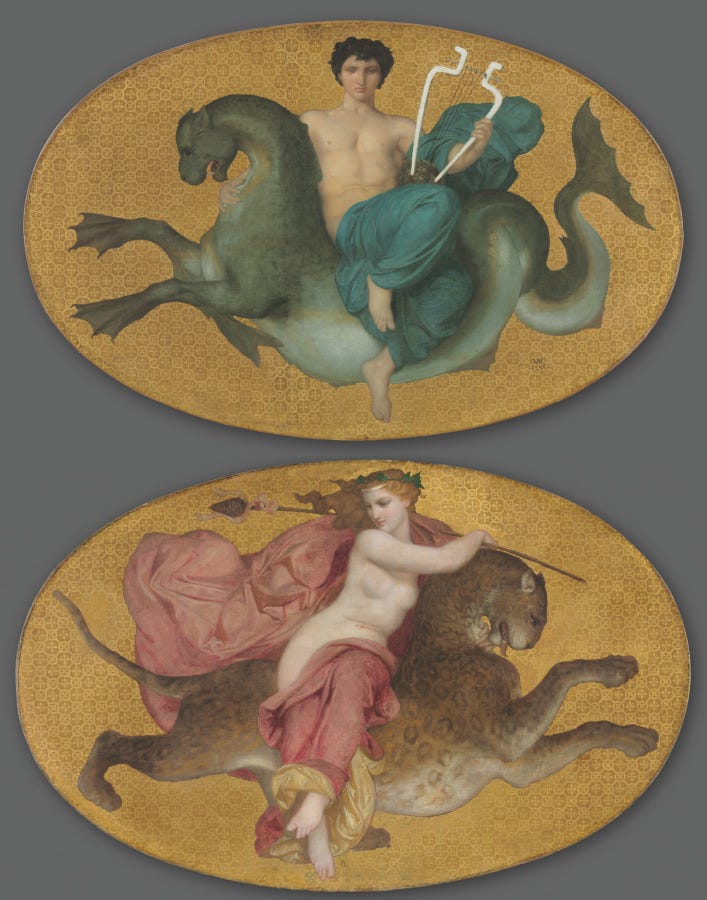
For several weeks, Bouguereau copied all of the famous decorative paintings that were loosely inspired by scenes in Ovid, Propertius, Catullus, and Petronius and which celebrated the loves, fabled exploits, and idylls of the gods. He sketched the delicate arabesques of intertwined flowers that ran along the cornices as well as the fanciful architecture that formed an endless horizon along the walls.
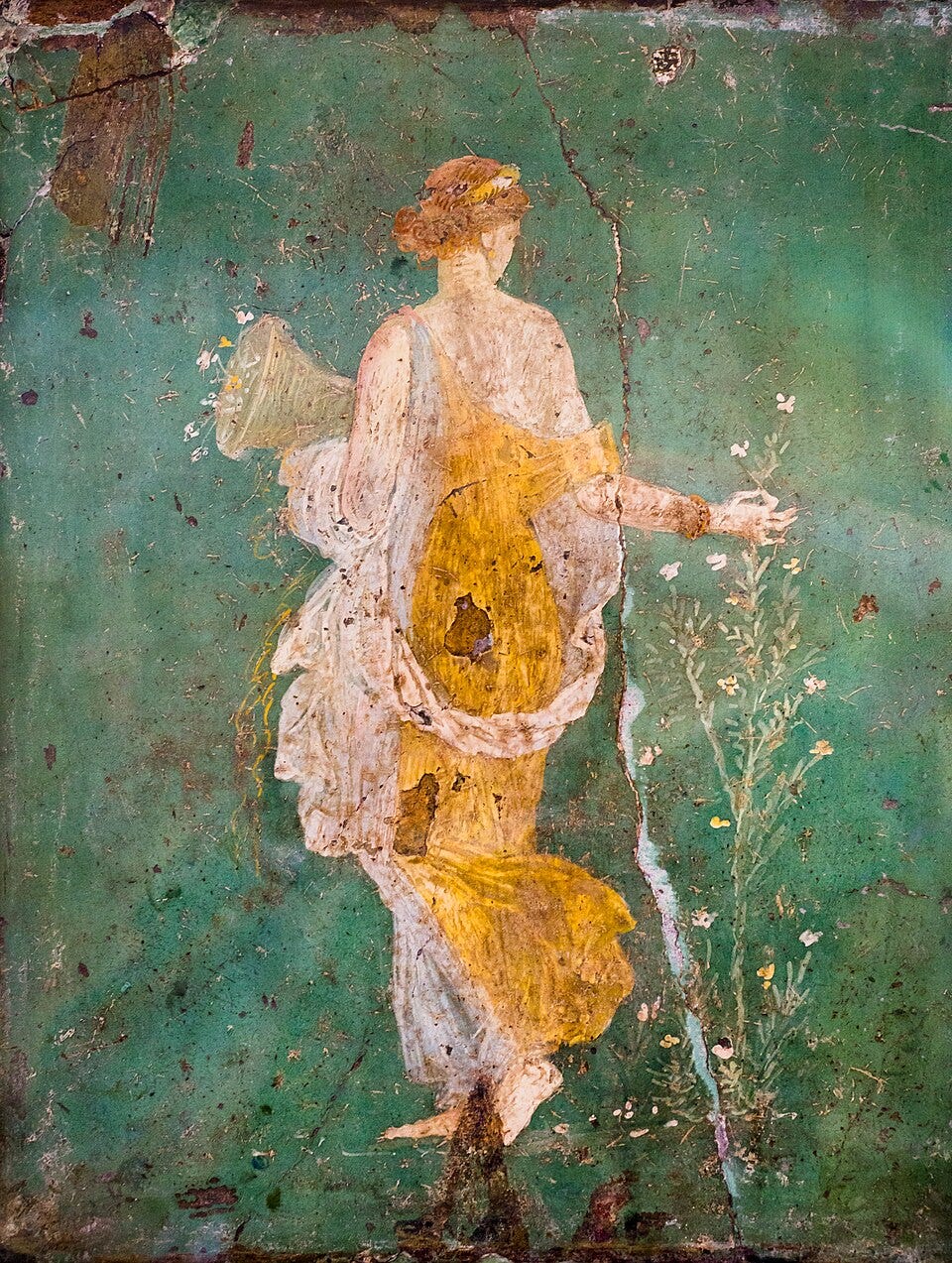
His hand aching with fatigue, he would wander the streets and delight in the forum, temples, and the theatre. His dreams populated the city with living figures who were full of grace, elegance, and beauty. It was here that the painter learned how many picturesque and seductive poses a beautiful young woman can assume: she might lean against a column or a tree, bend down or kneel, her clothes might be draped or flowing, a leg could be advanced, or an arm raised, or a breast uncovered. He learned how to please the eye with forms, lines, and colours, and how to stir or soften the emotions with a refined stance, a noble attitude, a smile, or a look.
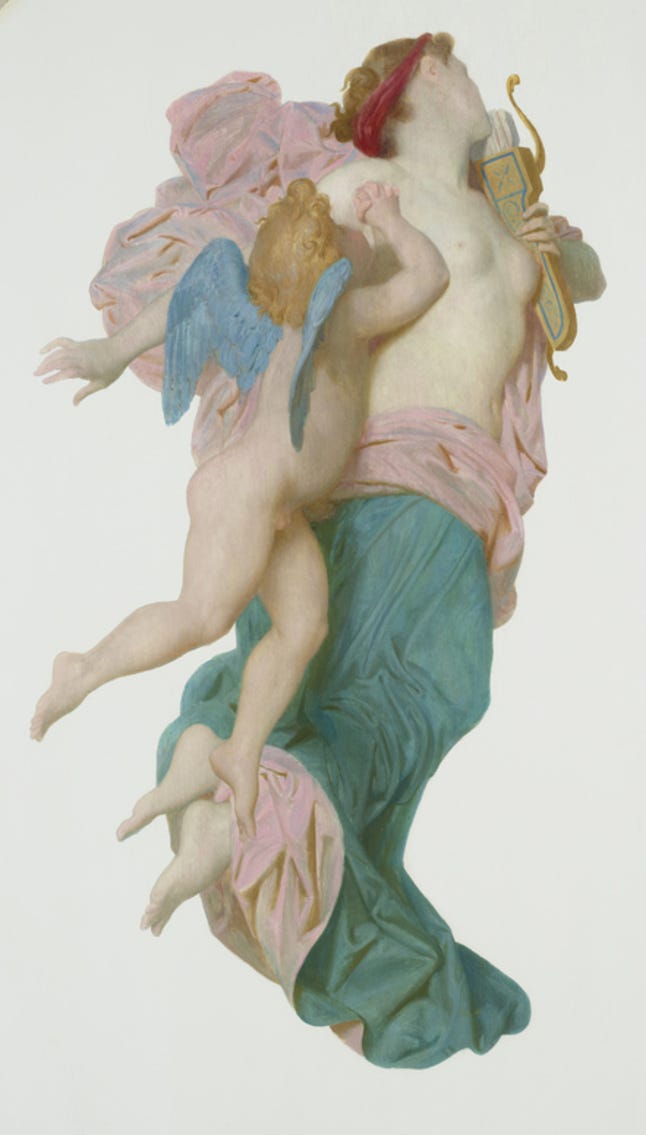
Bouguereau developed a taste and an aptitude for allegorical subjects — these subjects were popular at the dawn of art, and will still be so during its decline because they deal with eternal subjects: love, beauty, the seasons, months, days, and hours. He was initiated into the secrets of these simple and ingenious arrangements which, endlessly varied by a fertile imagination, will always appear new.
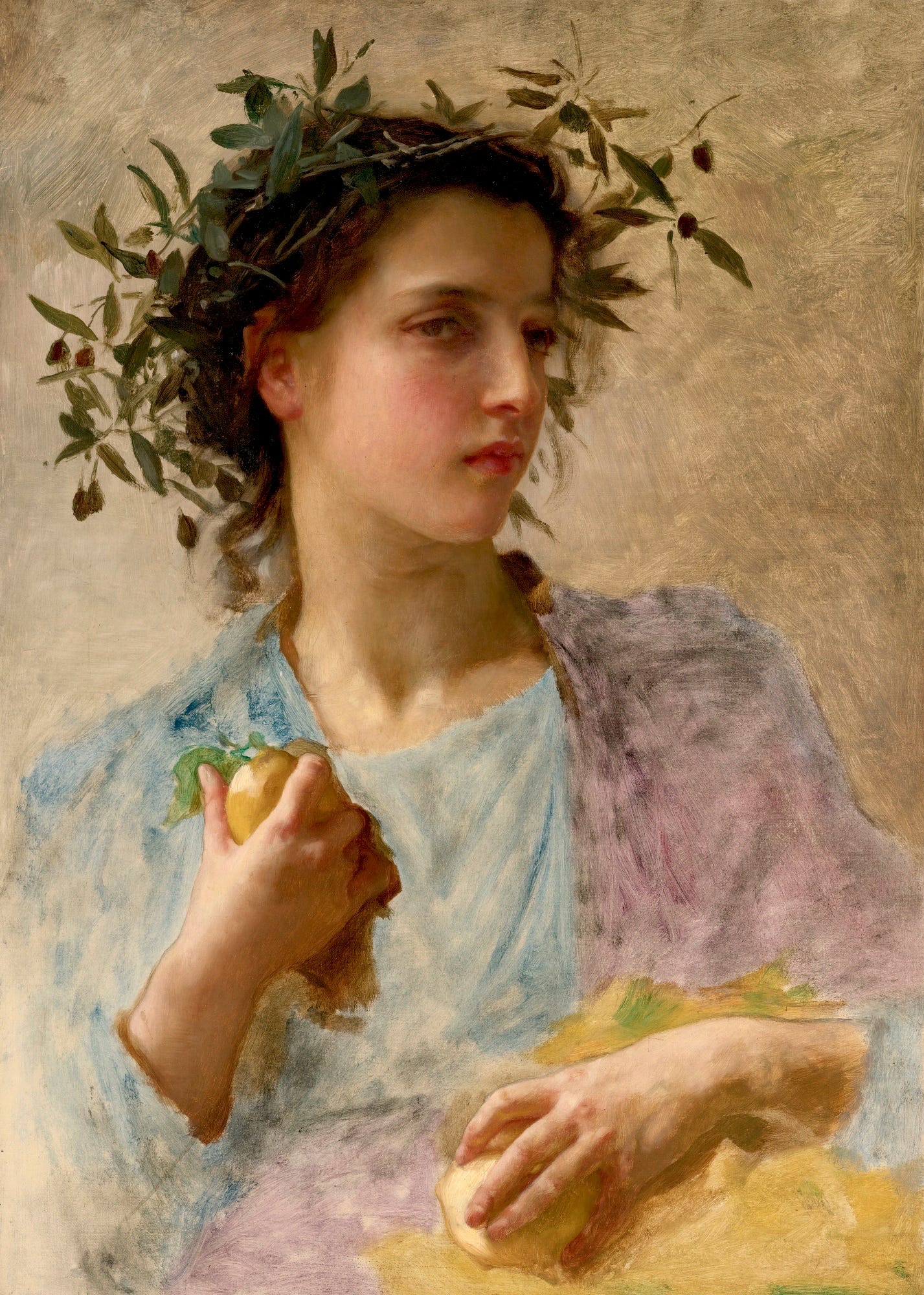
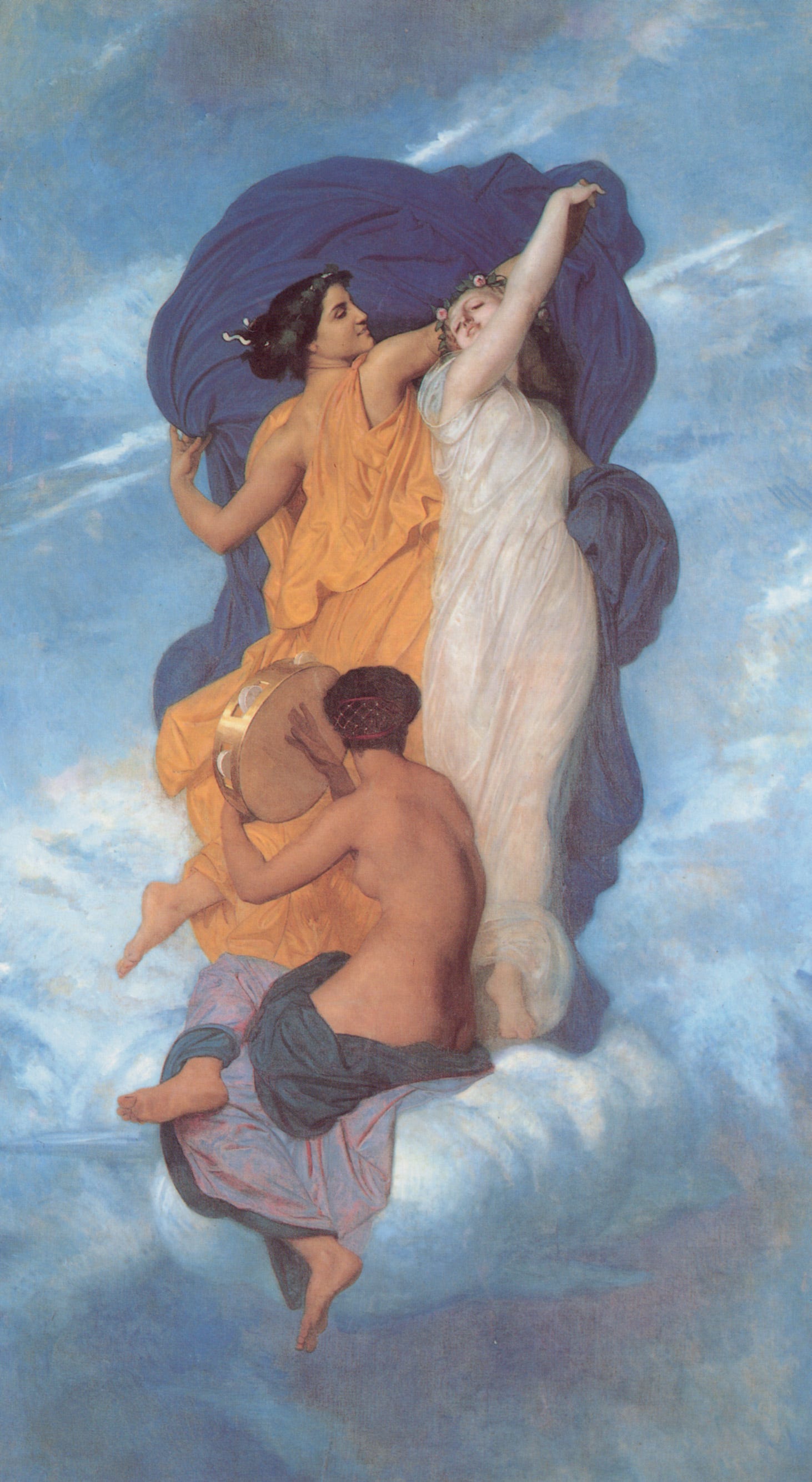
This marvellous spectacle of ancient art resurrected, this new revelation of beauty and grace, they made such a deep and intense impression on the young artist that his first murals in the Bartholoni hotels were directly inspired by the paintings he had seen in the Villa of Cicero and the House of Castor and Pollux in Pompeii — where bacchantes and dancers appear against a black background and their bare flesh, lily and rose-coloured, can be seen from beneath their light gauze clothes.
After seeing his fine, polished work, Edmond About2 says that an accomplished sculptor used to tell to his students, quite rightly: “Have you not been to Pompeii? Well, go and visit Bouguereau’s studio.”
After much desultory fussing and countless mock-ups, I’ve finally settled on some standard book dimensions that are easy on both the eyes and the wallet. More on this later.
François Edmond Valentin About (1828-1885), an art critic and journalist.