The painter Lovis Corinth (1858–1925) bridged the academic and the modern, developing a style that was somewhere between Impressionism and Expressionism. I am translating his manual for art students, Das Erlernen der Malerei (Berlin: Paul Cassirer, 1909), and sharing excerpts from my first draft as I go. You can find all the posts here.
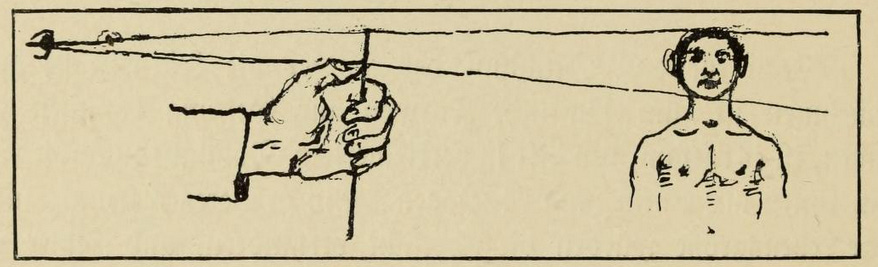
In this chapter Corinth recommends a traditional method of proportional sighting, using a knitting needle held at arm's length to measure the figure:
The first task, before beginning the actual drawing of the nude figure, is to establish the correct spatial arrangement.
Since spatial arrangement is what matters most in the making of pictures, one should start thinking about it at the outset.
In nude drawing, the goal is to use the paper as fully as possible. The highest point of the model, usually the crown of the head, should approach the upper edge of the sheet, and the lowest point, the sole of the foot, should be near the lower edge. For seated or reclining figures it may be necessary to turn the sheet crosswise, in which case one must also consider the left and right sides of the paper.
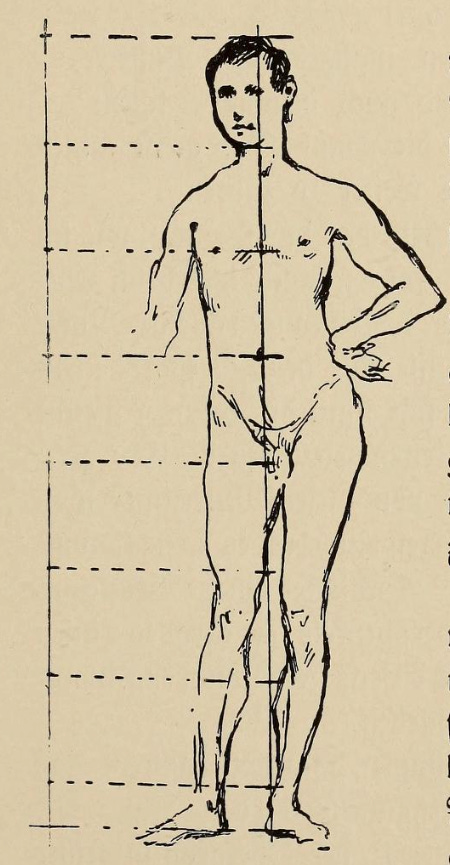
To achieve this arrangement, you must measure the nude in sections, draw a vertical line, and mark off the sections along it until they span from top to bottom edge. The nude is usually measured in head-lengths.
Besides this proportional division, you must also establish the position of other points through comparison, which I shall name later. The vertical and horizontal naturally come into play again here. At this point you will need these tools:
1. A plumb line (a piece of thread weighted at the bottom with metal);
2. A straightedge (for horizontal lines);
3. A knitting needle for sighting, to measure the proportions.
To sight: hold your arm outstretched and bring your eye, the tip of the knitting needle, and the uppermost point to be measured into one line. Then slide your thumbnail down until eye, thumbnail, and the second point align. Transfer this measurement to your drawing, and you now know how many such units compose the figure. Measure in the same way how the individual parts relate to one another. For horizontal measurements, proceed the same way from left to right. When measuring you must naturally remain at exactly the same spot and keep your arm fully extended. The slightest shift will distort the measurements and result in the most serious errors.
Corinth goes on to describe various parts of the body in detail, drawing the student’s attention to particular bones, muscles, and physical landmarks. I thought the section below was interesting because of the line from Ingres, and wonder if Corinth first heard it from Bouguereau while he was studying Académie Julian:
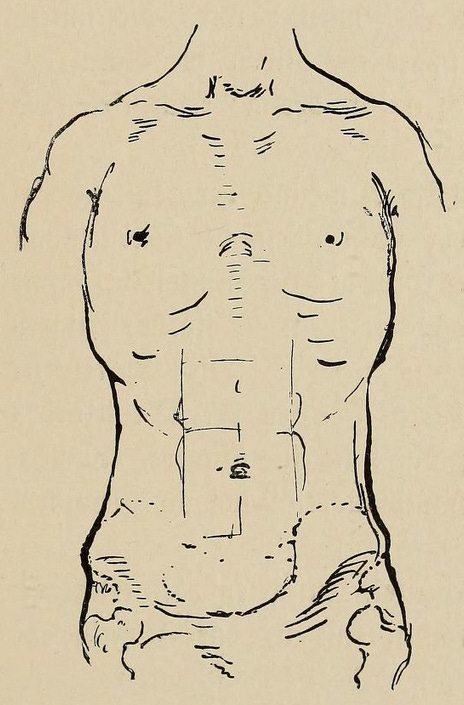
As mentioned above, the position of the nipples and navel should have already be indicated on the initial sketch, not only for measuring purposes but for a second reason: they give the torso its individual character. As Ingres used to say, “Le nombril est l’oeil du torse.”1 The short ribs become visible at the upper sides of the abdomen, and the serratus muscles lie over them. Below this comes a longer area free of bone, where the oblique abdominal muscles attach to sternum and pelvis.
The painter works his way through aspects of the front and rear view of a model, as well as the legs, arms, and hands, but he concludes by saying that it is not necessary for an artist to have a profound understanding of anatomy:
I hope that these detailed descriptions will allow you to make a sound nude drawing. But if someone were to ask if a knowledge of anatomy is absolutely necessary for the study of drawing, my answer would be no.
For just as a sensitive person could immediately determine if something were wrong with a drawing, even if he had never seen a naked human body before, so too will a talented beginner be able to find the right way to to proceed, relying on instinct and artistic feeling alone. And this would be a sure sign of his aptitude.
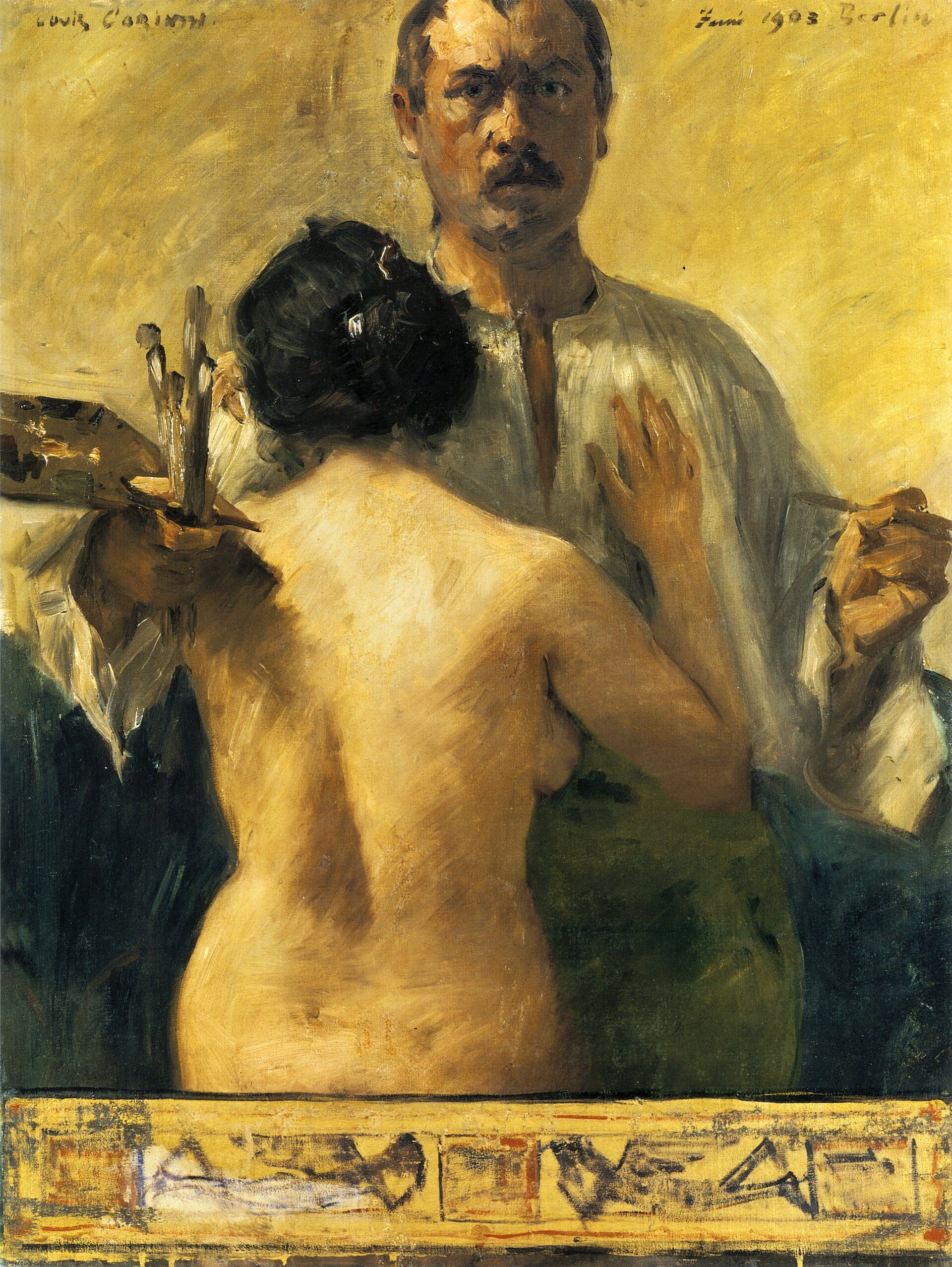
Lovis Corinth, Self-Portrait with Model (1903)
There are 25 lessons in the book. Sign up below to receive translations by email:
The Obolus Press publishes the kind of books you won’t find anywhere else: works that have never been translated into English, literary and philosophical texts that have fallen out of print, and monographs about neglected European artists.
Recovering what mainstream publishing abandoned. We sell directly to readers, not through Amazon. Order at www.oboluspress.com