
The Louse and the Flea
Entomological thoughts from Grenadier Rudolf Koch

The German typographer Rudolf Koch (1876–1934) wrote a memoir about his experiences during the First War. I am translating it into English and sharing a few excerpts from my first draft as I go. You can find previous posts here.
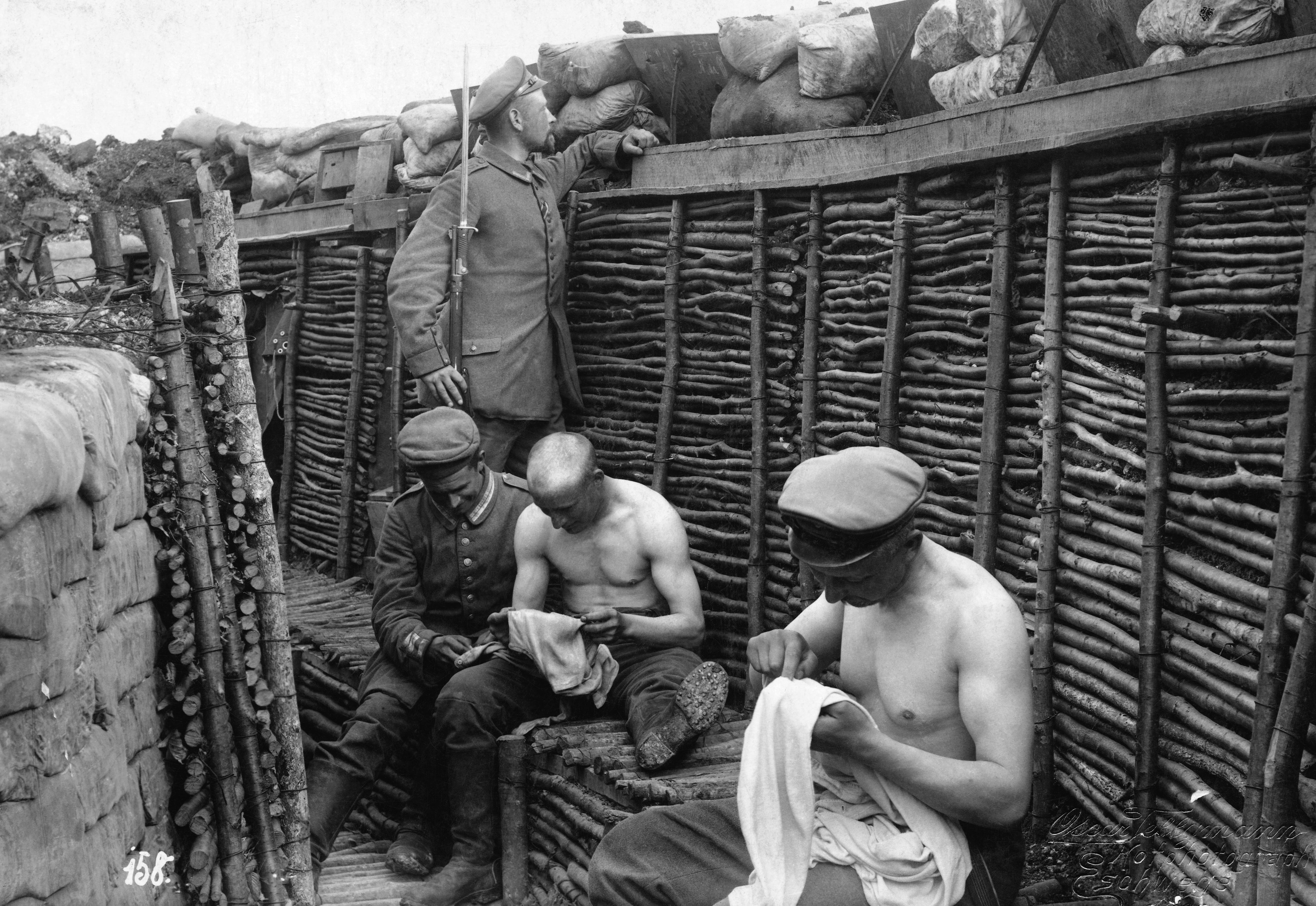
The louse and the flea are the soldier’s constant companions, and it is most interesting to study their nature and observe their qualities and manner of life.
The louse is a companionable little creature, with a certain ease in her habits. Alone or in pairs she scarcely troubles a man. One of her virtues is that, in her touching innocence, she allows herself to be caught quickly and easily. Her vice is her passionate drive to multiply; once they have reached wartime company strength, lice become dreadful indeed. In the bloom of youth they are as transparent as glass, and it is this rather than their innocent attempts to creep away into seams or folds that renders the hunt for them more difficult. The old lice are dark and sluggish; cracking them between fingernails is one of the soldier’s few pure pleasures.
The flea is more passionate, more impetuous, more impudent. He is a bold, lone combatant who produces far fewer offspring and does not tolerate his own kind in close proximity. Yet even in isolation he has a terrible effect. He robs a man of sleep at night and of rest by day. He commands his territory utterly and, to the torment of his victim, he traverses it at great speed. His way of life is very similar to that of the cuckoo, except he does not call.
Fresh linen troubles the flea less than it bothers the louse, and his vicious bites can rouse men from the deepest sleep. To hunt him is an art that few have mastered, and even those imperfectly. I myself have never managed to catch a flea, so I cannot offer a detailed description of his appearance.
Where the flea appears, the louse withdraws. The two cannot live side by side. They are like wolves and sheep.
A message to fellow writers on Substack: I have stopped using Notes and probably look like a dormant subscriber because I prefer to follow via RSS. While I am not active on the app and seldom leave “likes” or comments, I continue to read and appreciate your work.